
Learn more about how your children can develop successful habits through participation in martial arts — beginning with confidence, discipline and a positive attitude.
Martial arts training, and especially the training found with MSMAP, is an excellent activity for children to move around and learn how to be aware of their bodies.
They not only develop coordination, balance, and agility, but they also learn positive social skills through challenging exercises and games closely linked with good manners.

In addition to a safe environment, the Mount Shasta Martial Arts Program (MSMAP) strives to create a supportive and rewarding environment that invigorates the participants and refreshes their outlook towards many areas of their lives.
Training with MSMAP enables participants to develop a positive attitude when facing challenges at home, school, everywhere...and achieve really big things.

Benjamin Franklin
The MSMAP training program is based upon “The 5 S’s”:
Self-Training
Self-Discipline
Self-Confidence
Self-Defense
Self-Respect
With an emphasis on the The 5 S’s, martial arts training becomes an activity that reinforces positive characteristics.
For parents, “allowing your child to receive martial arts training is not opening up a door to violence, it is opening a door to building a solid foundation of self-esteem and confidence.”Haley Participants are not learning mayhem. Through progressive, rigorous, and consistent physical training, they instead learn a variety of skills including self-discipline and self-respect laying the foundation for the ability to conduct themselves well with others.
“The study of the martial arts holds great potential as a stabilizing factor in the lives of children. Ideal for all ages, it especially provides a unique opportunity for children to develop mind and body, to gain strength and integrity and to have fun.”Martin
One study investigated the martial arts training of couples and families and found that “martial arts parents consistently report that their child’s involvement in martial arts has helped their children develop and practice respect for both the self and for other people.”Lantz
David Law suggests that taekwondo fulfills the five basic needs of human beings (per William Glasser’s basic needs theory):
Belonging
Freedom
Survival
Power
Fun
“Through strict discipline, taekwondo trains both the mind and the body, placing great emphasis on the development of the moral character. In other words, control of the mind, self-discipline, kindness and humility much accompany the physical grace.”Law
Another study further outlines how martial arts training can be of substantial benefit. Twemlow states that “martial arts show promise for helping a particularly problematic group — violent adolescents. The literature suggests that the key therapeutic elements are the teacher as role model, the use of physical exercise, the philosophy of ethical behavior and restraint, and group participation.”Twemlow
Safety, safety, safety. The safety of all program members is the main priority. Children are not asked to do more than they are ready for and may opt out of any exercise if they feel uncomfortable. All training sessions are under the supervision of one of the MSMAP primary instructors who are attentive to the safety and well-being of the entire group.
According to Joyce Roberson, a martial arts expert and author of the “Karate for Kids‘ column, “If any parent is looking for very cheap entertainment for themselves, then karate is it! To see 15 to 20 4-, 5- and 6-year-olds lined up in their white uniforms, going through movements in unison and putting their heart into these efforts, can make a remarkable memory for any parent.”Haley
Recent studies emphasize the benefits of letting children play and have fun through games and other physical activity.
“Amika Singh, a senior researcher at VU University in the Netherlands, reports in the Archives of Pediatric and Adolescent Medicine that physical activity is associated with better academic performance, as measured by higher GPAs and better scores on standardized tests....the studies showed that the more physical activity the children had, the higher their scores in school, particularly in the basic subjects of math, English and reading.”Park, 2011
Active physical play can also help improve a child’s emotional well-being. Children have energy — let them play to release that energy. Playing video games isn’t the same thing as running, wrestling, or kicking.
“Active physical play can create the opportunity for tension release for your child. In fact, a very active child may carry emotional stress that drives his relentless energy. The laughter and physical bumping, wrestling, and knocking around that takes place during ‘Special Time’ help active children find a healthy outlet for the tensions that may have shifted their young systems into overdrive. Play, laughter, and the adult’s permission to be oneself can heighten a child’s sense of emotional safety.”Wipfler
.Other benefits of play and exercise include:
Stronger muscles and bones.
Decreasing the risk of developing type 2 diabetes.
Leaner body and less likely to become overweight.
Possibly reducing blood pressure and blood cholesterol levels.Kids Health.
Increase sensation throughout the body including spatial awareness and a phyiscal understanding of rhythm, cadence, distance.
Local school teachers and principals in Siskiyou and Shasta Counties see the positive results of participation in MSMAP firsthand.
“Students who participate in MSMAP are well disciplined and respectful,” notes Sally Gasaway, former principal of Mount Shasta Elementary and Sisson Middle Schools. “They are conscious of how they are speaking to adults, and the appropriate way to respond to situations. Students respect themselves.”
“As a teacher, I’ve noticed that my students who participate in taekwondo have better self-control,” observes Julie May, a teacher at Sisson Elementary School in Mount Shasta. “I think it allows children the chance to engage in a mind-body practice that will provide a good foundation for fitness as well as mindful living. I have a particular student who was having a difficult time behaving in class and being respectful. As soon as he started taekwondo with MSMAP, I noticed a huge change in the classroom. He has become much more respectful of his peers and teachers. It’s a testament to kids truly being able to take the lessons of taekwondo “off the mat.’”
What it is. Bullying takes on many forms including words, threats, and fists — physical violence (i.e., threats, pushing, hitting, more) to teasing/name-calling to spreading rumors, gossip, and lies. Online bullying, or “cyber bullying,” using tools like text messaging, Facebook, and Twitter is another very painful form of bullying.
The numbers are unsettling. An instance of bullying occurs in a school every seven minutes and 20-30% of school-age children are either a victim or a bully.Townsend-Butterworth In fact, “aggressive behavior and bullying are even more common in elementary school than in junior and senior high” and is most prevalent in second grade.DeHaan
Here's one solution. “So what can a parent do to help protect their child when they are at the mall, out walking with a friend or waiting for the school bus? Simple, encourage them to enroll in a martial arts program and learn at least the basics of self-defense.”Perry
Self-defense and anti-bullying strategies — for whatever form bullying takes — are key components to the curriculum of MSMAP. Our goal is to familiarize children and teens with the idea that sometimes “wrong is wrong,” recognize and acknowledge bad situations, and then to take steps to remove themselves from a bad situation, effectively and appropriately.
Even more, the instructors of MSMAP pay close attention to helping children and parents deal effectively with teasing and bullying. Although teasing is an unfortunate part of growing up, it “becomes bullying when it is repetitive or when there is a conscious intent to hurt another child” either verbally, psychologically, and/or physically.
For Children, Teens, and Parents: Our Bully FAQ and Teen Dating Violence FAQ provide plenty of information in order to better understand these problems, how to prevent these problems, and how to deal with these problems and get help. Check it out...
How can we teach our children not to be angry?
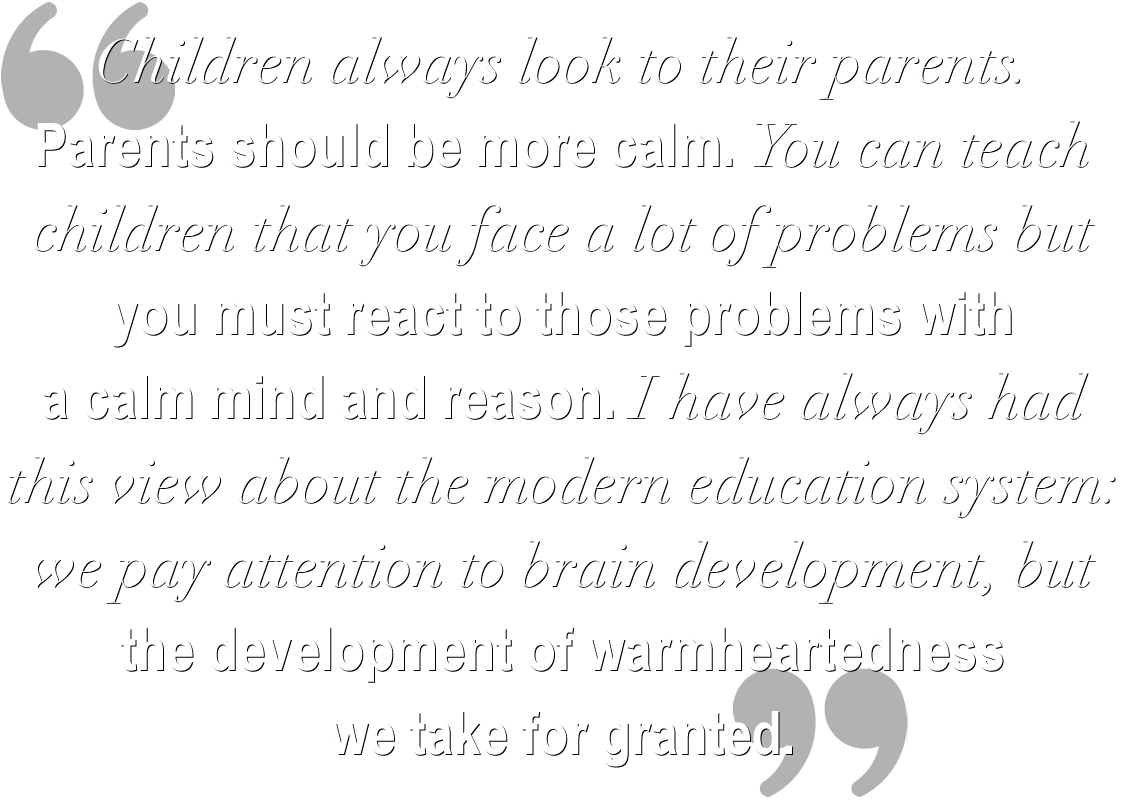
Dalai Lama
One strategy that MSMAP instructors apply and that parents can also apply is to be a good example of kindness and leadership. Children learn much from the adults around them (parents, family, friends, teachers, etc.). If parents have good manners, children will also learn good manners.
“Your kids learn a lot about power relationships from watching you. When you get angry at a waiter, a sales clerk, another driver on the road, or even your child, you have a great opportunity to model effective communication techniques. Don’t blow it by blowing your top! Any time you speak to another person in a mean or abusive way, you’re teaching your child that bullying is ok.”Education.com
The MSMAP strategy relies upon appealing to a child’s reason and developing sense of fair-play when applying discipline for misbehaviour. Rather than using physical means for discipline, the MSMAP method is to start out by asking if the behavior was good or bad manners (children know the difference) and if they can apologize. For the offended party, the MSMAP method encourages children to speak directly to the offender in a clear manner and communicate their dislike for being pushed or cut in line.
The long-term effectiveness of a non-physical form of discipline is supported by the American Academy of Pediatrics (AAP) and a recent scientific study. The AAP does not endorse spanking under any circumstance; the AAP states that it’s a form of punishment that becomes less effective with repeated use.
The recent study of 2,500 children determined that physical punishment, specifically spanking, is a strong predictor of violent behavior. In short, violence leads to more violence.
Community-health-sciences professor Catherine Taylor determined that children who were spanked more frequently at age 3 were much more likely to be aggressive by age 5. The reason for this “may be that spanking sets up a loop of bad behavior [that] instills fear rather than understanding.” Children do not necessarily connect the dots of being spanked with inappropriate behavior. “What’s more, spanking sets a bad example, teaching children that aggressive behavior is a solution to their parents’ problems.”Time.com
The cognitive benefits of exercise and martial arts (improved concentration and memory) carry over into school. Creative thinking and visualization help with understanding new material and leads to a positive mental attitude, self-confidence, and self-respect.
Sally Gasaway, former principal of Mount Shasta Elementary and Sisson Middle Schools, observes physically active children doing better in the classroom than their more sedentary peers.
“We have found that when students participate in physical activities throughout the day they are more focused and productive,” said Gasaway. “Children need some form of physical activity everyday. They need to be taught breathing techniques and appropriate ways to respond to conflicts. Most importantly, they need to understand the physical changes that happen when anxiety levels rise, and they need to be taught a variety of methods to release that anxiety.”
Gasaway observes that “students who participate in MSMAP are well disciplined and respectful. They are conscious of how they are speaking to adults, and the appropriate way to respond to situations. Students respect themselves.”
Mark Telles, former principal of Castle Rock School in Castella, agrees and sees the dramatic changes of children who participate in MSMAP firsthand.
“In some cases the changes in students have been like night and day,” says Telles. ”A number of our students have made remarkable changes in their behavior simply because they learned to be respectful toward others and in control of their actions and behaviors. I attribute this change in large part to the work they have done with MSMAP and to the atmosphere of respect in the program. The students seem to have a greater awareness of the world around them, and they exhibit a higher level of self-confidence. I have had a number of school staff comment on the changes they have seen in these students, and the students themselves demonstrate improved academic focus and significantly better social interaction.”
Telles goes on to explain how students are able to make these positive changes.
“By being in regular communication with Chuck [Buhs, head instructor of MSMAP], I have been able to reinforce the lessons, values, and especially the quality of self-control he teaches his students,” adds Telles. “Like all schools, we insist that students keep their hands and feet to themselves in order to avoid problems or conflicts. However, for some kids this is an abstract concept until they understand the value of self-control and learn that they have the ability to be aware of, and in control of, their actions and behaviors. This is an important part of what Chuck teaches and the results speak for themselves.”
Don’t take our word about what we do—read what our parents say about us, what we do, and what they get from it.
“Our daughter is a very gentle being, so this competition took tremendous courage for her. She is now stronger emotionally and mentally — a major victory for her! Taekwondo has helped her expand her mature qualities, giving her focus and confidence to face anyone.”
— Ailita Saryon
“Not only has participation in MSMAP met our expectations, it has far exceeded them. Our children's self confidence is amazing, and they both take leadership roles on and off the mat. I have witnessed my son calmly stand up to bullies, not only for himself, but for others as well. I am so proud of all of the students successes over the years. It does not come easy, and it takes a lot of hard work and dedication. Master Buhs is an amazing instructor and role model.”
— Spring Cohen
“I see changes in both of our boys since starting taekwondo. Dylan has always been shy and I see him coming out of his shell more. Tiny Tigers helps Brayden feel important and has enhanced his loud and passionate personality. I see more confidence, better flexibility and balance.”
— Emily McIntyre
“MSMAP makes a huge difference in this community for both kids and adults. So many kids from exceedingly diverse lifestyles and households meet together on the mat and practice not only martial arts, but also respect, cooperation and tolerance.”
— Robin Weaver
“Tiny Tigers give our 5-year-old grand-daughter the confidence to be assertive in a positive way, to say what is on your mind, and if something does not feel right, it is OK to say, ‘No.’ Plus, the older kids that help are a group of sweet, kind role models.”
— Janice Johnson
“I have no doubt that being part of this group is what my son needs and is helping him to grow and become a better person.”
— Lourdes Schrievers
“Since starting taekwondo at the MSE After-School Program, I've noticed an increased ability for my daughter to focus on a task and an increase in her self-confidence.”
— Brian Witherell
“The instructors teach and encourage safety, manners, and respect while keeping it fun. Our sons have learned discipline, a new idea of what respect means, and how to deal with disappointment. They have discovered the joy and anxiety of preparing for a promotion test, and, most importantly, that focus and hard work pay off.”
— Amy Cambou
“Chuck goes out of his way to bring the students and parents together regularly, and to work with area schools to help the community understand the benefits of taekwondo — discipline, manners, respect, and peaceful conflict resolution. As parents, we watch this happen constantly in Chuck’s classes — an invaluable experience for our six year old son.”
— Paula Reynolds
“MSMAP provides a steady, reliable place for us to go and learn about safety, self-respect, teamwork, and also martial arts. I get exercise and confidence. I feel by training I am becoming my best self and a better parent. I can better protect myself and my children and that feels great. I feel confident that my children can protect each other and themselves as well as others. My kids are stronger, more confident, and more disciplined. They get out energy and aggression which makes arguments at home less frequent and more reasonable. I have found a family at MSMAP and so have my kids.”
— Autumn Dyke
“At competitions and promotion exams, I’ve seen the results of my son’s training at more levels than just the physical skills. He is focused and maintains his composure under pressure.”
— Mark Hough
“Having the opportunity to participate in this program with my son makes the experience special and unique. Not only are we practicing a healthy lifestyle, but also building self-confidence and strong minds together. As a Mom, I am thrilled to be in a program that is so family friendly!”
— Shannon Neuman
“After only two classes, I can already see a difference in my daughter’s self-confidence and the sense of belonging to something that she can take pride in.”
— Heather Justice
“The students’ respect and focus is always felt in the studio. The level of performance by the students is a direct reflection of the high level of instruction they receive. We are so fortunate to have such a quality martial arts program in our area.”
— Kristin Carter
“After Competing in his first tournament and winning gold, my son now understands what training really means. It was awesome, a great experience!”
— Steve Alley
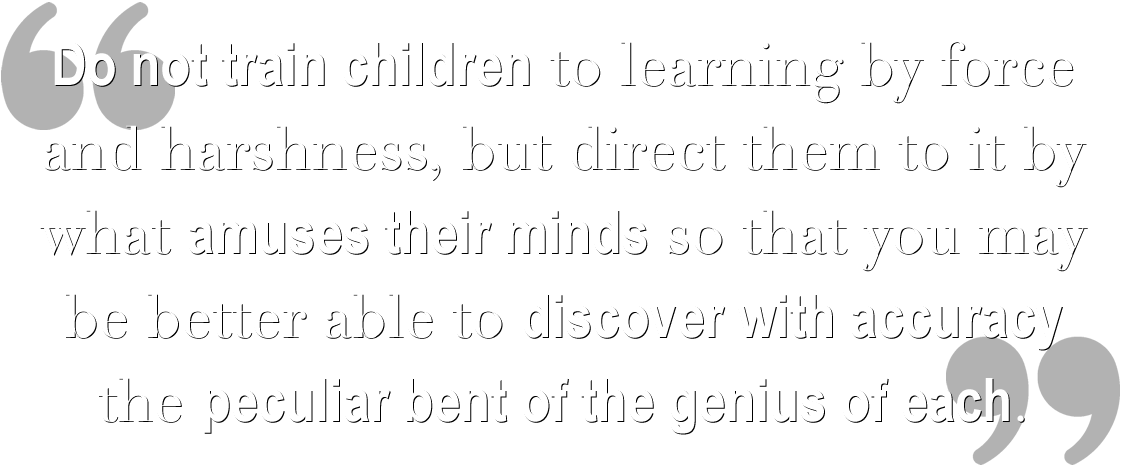
Plato
There is no secret to succeeding in martial arts. It is a straightforward method: stick with it. It’s that simple.
According to ongoing research at the University of Pennsylvania by Angela Duckworth, success is not about how smart someone is or how much natural talent they have. A very good predictor of success is how much grit a person has. Grit being applied sustained effort over a long period of time to get something done.
Duckworth defines grit as “perseverance and passion for long-term goals” and “entails working strenuously toward challenges, maintaining effort and interest over years despite failure, adversity, and plateaus in progress.”
Dweck supports this. Children praised for their intelligence cared more about their grades than learning subsequent tasks. After a failure, these children were less persistent than their peers who were praised for their effort. When children are praised for their effort, they are energized in the face of adversity.
Again, it’s very simple: practice, practice, practice. More specifically, “smart practice” or deliberate practice is the critical ingredient for improving skills and knowledge. A simple definition for deliberate practice is practice with a clear purpose or goal in mind. K. Anders Ericsson, a long-time professor at Florida State University, specifies in his landmark 1993 research that “deliberate practice includes activities that have been specially designed to improve the current level of performance.”
Deliberate practice is different from public performances, competitions, services-for-pay, and other activities motivated by external rewards (work) and those activities without explicit goals and that are done primarily for the sheer enjoyment (play).
But, don’t mistake “simple” for “easy”. It’s a long-term process and requires people to keep at it. Duckworth states that “grit is not just having resilience in the face of failure, but also having deep commitments that you remain loyal to over many years.”
To help children succeed, MSMAP provides all the required factors:
Reliable Environment
Children love the familiarity that comes from routine.
Opportunities to Grow
Going outside their comfort zone and testing their skills allows children to expand their abilities.
Connectivity
Having people around that children can rely on for comfort and reassurance allows children to feel safe to explore.
Encouragement
A few words of support give children a powerful boost needed to persist exploring and expanding their skills.
Problem Solving Skills
Allowing children to fix their own problems gives them tools to deal with life. It’s not so much about always fixing a problem but developing a methodology to rely upon for fixing problems.
1. DeHaan, Laura, Ph.D. “Bullies”. February, 1997.
2. Duckworth, Angela Lee and Lauren Eskreis-Winkler. “True Grit.” Observer Vol.26, No.4 April, 2013.
Duckworth, Angela L., Christopher Peterson, Michael D. Matthews and Dennis R. Kelly. “Grit: Perseverance and Passion for Long-Term Goals.” Journal of Personality and Social Psychology, 2007, Vol. 92, No. 6, 1087&emdash;1101
Education.com. Ten Actions ALL Parents Can Take to Help Eliminate Bullying.
2. Flegenheimer, Matt. “Accusations of Bullying After Death of Teenager” The New York Times January 3, 2012.
2. Haley, Carma. “Karate Kids: Children and Martial Arts” Children Today
This is a test. “Kids and Exercise”. Kids Health.
3. Hubert, Cynthia. “Granite Bay teen who committed suicide was bullied for being gay” The Sacramento Bee. January 15, 2012.
5. Khadaroo, Stacy Teicher. “Phoebe Prince bullies sentenced, but how do they make things right?” The Christian Science Monitor. May 5, 2011.
3. Lantz, Jim. “Family Development And The Martial Arts: A Phenomenological Study” Contemporary Family Therapy 2002; 24(4): 565-580
4. Law, David. “A Choice Theory Perspective on Children’s Taekwondo” International Journal of Reality Therapy 2004; 24: 13-18
5. Martin, Michelle. “Kids Get a Kick Out of Martial Arts” Balanced Living Magazine 2004.
5. Miller, Carlin DeGuerin. “Phoebe Prince’s Final Days: Bullied Girl Suffered ‘Intolerable’ Abuse Before Suicide, Say Court Docs” CBS News. April 9, 2010.
6. Park, Alice. Let the Kids Play: They’ll Do Better in School Time.com, January 3, 2011.
7. Park, Alice. “The Long-Term Effects of Spanking” Time.com, May 3, 2010.
7. Perry, Tenna. “Fighting Back: Children in Martial Arts Save Lives” iParenting
8. Townsend-Butterworth, Diana. “Teasing and Bullying: No Laughing Matter: What you must know – even if you don’t think it affects your child” Scholastic Parents
9. Twemlow, Stuart W., and Sacco, Frank C. “The application of traditional martial arts practice and theory to the treatment of violent adolescents” Adolescence 1998: Fall.
10. WebMD. "Bullying" 2009.
12. Wipfler, Patricia. “Helping the Very Active Child” Education.com
Check it out...more on the way...